


search
date/time

Sun, 9:00PM
light rain
5.3°C
W 17mph
light rain
5.3°C
W 17mph
 | Sunrise | 6:26AM |
| Sunset | 6:13PM |  |

Andrew Palmer
Group Editor
P.ublished 14th March 2026
arts
Review
Classical Music: Puccini: Orchestral Works
The Sinfonia of London captures the early Puccini in all his youthful splendour.
Preludio sinfonico; Capriccio sinfonico; Le villi: Preludio (Act I), La tregenda (Act II); Scherzo in A minor and Trio in F; Adagetto; Manon Lescaut: Preludio (Act II), Intermezzo (Act III); Crisantemi; Tre minuetti; Edgar:Preludio (Act I), Preludio (Act III).
Sinfonia of London / John Wilson
Charlie Lovell-Jones / John Mills leaders
Chandos CHAN 5385
Chandos.net
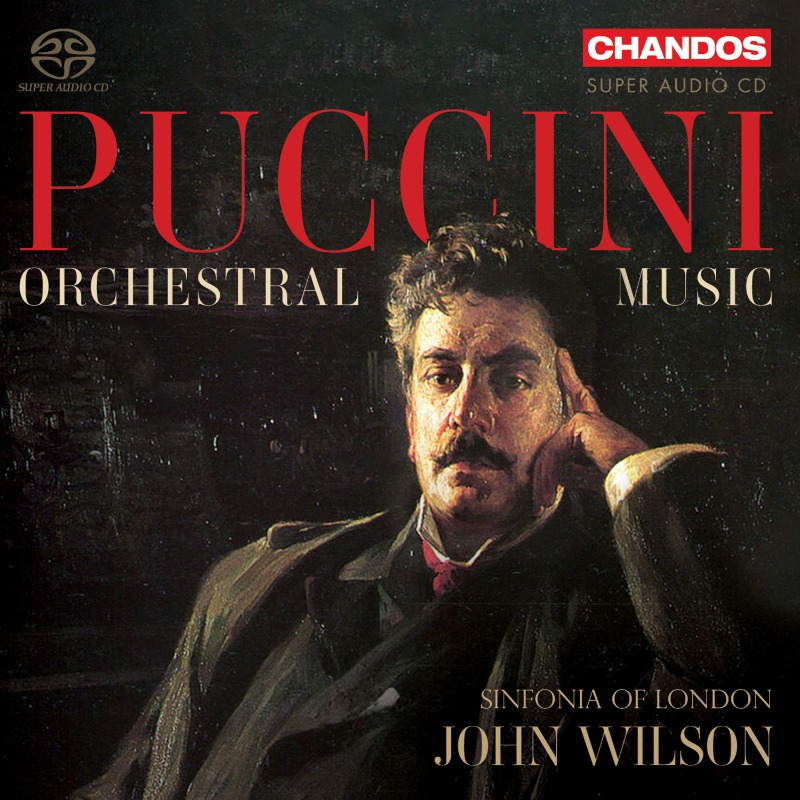
Studying under Amilcare Ponchielli at the Milan Conservatory from 1880 to 1883, the young composer produced a clutch of works that betray his influences whilst hinting unmistakably at the gifts to come.
The Preludio sinfonico, written when Puccini was barely eighteen, loosely echoes Wagner’s Prelude to Lohengrin, yet the Sinfonia of London’s warm, persuasive account makes clear that something altogether more personal is already stirring; a tremendous crescendo with brass and woodwind excelling before the music subsides with luscious, lithe string-playing that is quintessentially Puccinesque in all but name.
Most celebrated among these student pieces is the Capriccio sinfonico, his graduation work, which famously pre-echoes the opening of La bohème by a full decade — a detail that never fails to astonish. The one-act opera Le villi was composed for a competition launched by the publisher Sonzogno, which Puccini did not win, though Verdi’s publisher Ricordi subsequently bought the rights and commissioned a new work from him: Edgar. Due to its absurd libretto, Edgar is arguably Puccini’s only failure as a stage work, even though it contains music of full maturity that is easily comparable to his more celebrated scores.
The Tre Minuetti and the elegiac Crisantemi—both originally for string quartets— were later recycled in Manon Lescaut, and Wilson captures the emotional tension of the latter with exceptional sensitivity, the strings playing with a depth of feeling that renders its grief entirely present.
John Wilson has become something of a Midas figure in the recording studio, and this release has all the hallmarks of that golden touch: Chandos’s engineering is superb, and the performances are committed and beautifully calibrated. A disc that illuminates a neglected corner of one of opera’s greatest careers.