


search
date/time

Sat, 9:00PM
few clouds
7.0°C
S 1mph
few clouds
7.0°C
S 1mph
 | Sunrise | 6:11AM |
| Sunset | 6:25PM |  |

Andrew Palmer
Group Editor
P.ublished 21st March 2026
arts
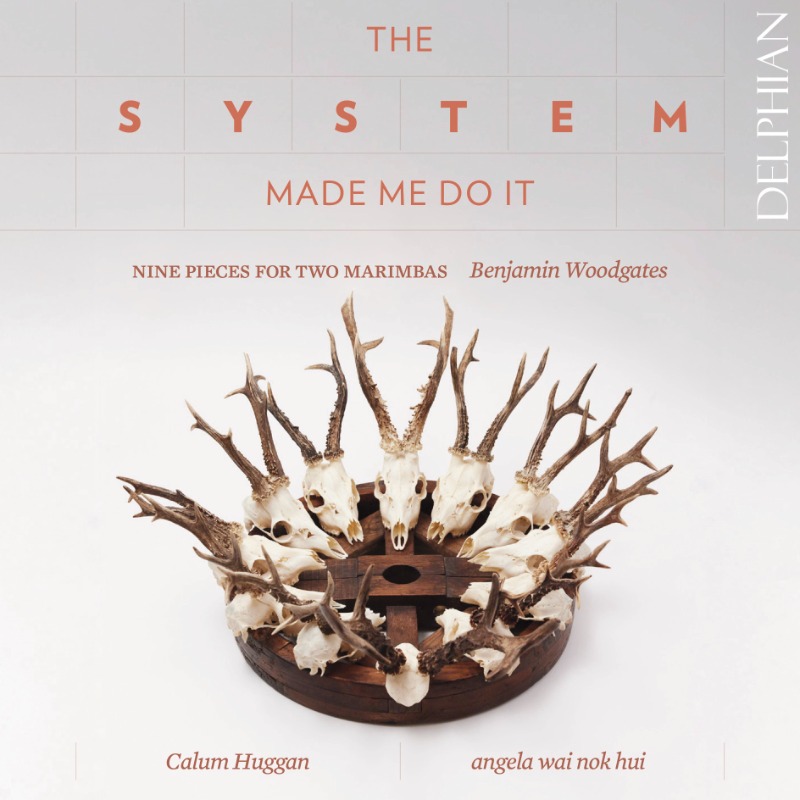
Classical Music: Benjamin Woodgates The System Made Me Do It
The Sound the System Makes
Calum Huggan, Angela Wai Nok Hui (marimbas).
Delphian DCD34737
https://www.delphianrecords.com/
His nine-piece cycle was composed as a sonic companion to the book, but Woodgates was determined from the outset that the music should transcend its source. "I wanted to abstract the music from the subject of the book," he explains, "to take it out of Russia and make it feel universal." That instinct steered him away from piano, electronics and—he adds with a certain dry wit—balalaikas, and towards the marimba, an instrument whose natural attack and decay made patterns not merely audible but visceral. "Many of the themes in the book deal with power balances or imbalances," he says, "so I opted to use two instruments so I could explore these dynamics in more detail." The choice proved inspired.
The opening piece, Particles/Waves, announces the work's governing logic with quiet brilliance. A mere four notes on the lower tone bars generate rolling waves of sound, their constant recombination conjuring an illusion of harmonic development where little has actually changed — a neat analogue, one suspects, for the managed appearance of political progress. Against this, tiny particles flicker from the upper register until the polarity inverts and the two forces exchange roles, coexisting finally in a state of mutual ambivalence. It is a deceptively simple mechanism that yields something unexpectedly rich.
What follows sustains this dialectical tension across eight further movements. The shared instrument in Not Apart, Not Together becomes a site of choreographed intimacy, where two performers are simultaneously magnetised and repelled, reaching for the same notes and stepping back when their proximity becomes too great. The movement responds to Ledeneva's chapter on Russia's relationship with the West, and Woodgates worked with considerable care to engineer the physical tension without tipping into farce. "I tried to plan it so that there would be tension between the two musicians but without them actually coming into contact with one another," he says. "Thankfully this worked out in rehearsal — no elbowing each other out of the way — and so we could record it as written."
Zigzags constructs a musical palindrome on the principle of two steps forward, one step back; its pushmi-pullyu contours are as politically suggestive as anything in Ledeneva's text. Triangles is more subtly subversive: one instrument appears to lead while the other follows like a shadow — until you realise the shadow is a step ahead, steering from behind through camouflage. Sound familiar?
The centrepiece, Double Pendulum, was composed with the aid of a modified metronome, its lurching, convulsive motion suggesting chaos while deep structural forces hold the whole erratic tapestry together. Cascades and System Games explore the margins of freedom within constraint—one instrument rigid and systematic, the other finding novel recombinations within the parameters set for it, feeding innovations back into a system that absorbs and neutralises them. The title track closes the sequence before Cycles / Tides draws everything into a swirling hemisphere of micro and macro repetition, permanence and uncertainty occupying the same breath.
The conceptual framework was itself a collaborative enterprise. Woodgates read a draft of Russian Pendulum before a note was written, then shared his ideas—conceptual rather than musical at that stage—with Ledeneva, the two working back and forth until they reached common ground. "Once we were in agreement on a conceptual level," he says, "I took full autonomy over the compositional process—we both felt it was right that I deferred to the system rather than the author. " It is a remark that is both self-deprecating and entirely apt.
The nine pieces function, Woodgates suggests, as both a unified suite and discrete responses to individual chapters—"both, I hope, at least." The musical building blocks consistently draw from the book's themes, yet the music is crafted to exist independently, free from its context. On this recording, it emphatically does. The result shimmers, pulses and occasionally buzzes with a barely contained energy — hypnotic in the manner of great haiku, compressed and elusive, arriving and departing in the same breath, and lingering long after the sound has died away.
Another fascinating release from Delphian, a label that consistently makes the unfamiliar feel essential.