


search
date/time

Fri, 4:00AM
overcast clouds
13.6°C
SSW 6mph
overcast clouds
13.6°C
SSW 6mph
 | Sunrise | 4:33AM |
| Sunset | 8:00PM |  |

Steve Whitaker
Features Writer
@stevewhitaker1.bsky.social
P.ublished 8th June 2026
arts
The Footsteps Of Dinosaurs: In Search Of Sea Dragons By Matthew Myerscough
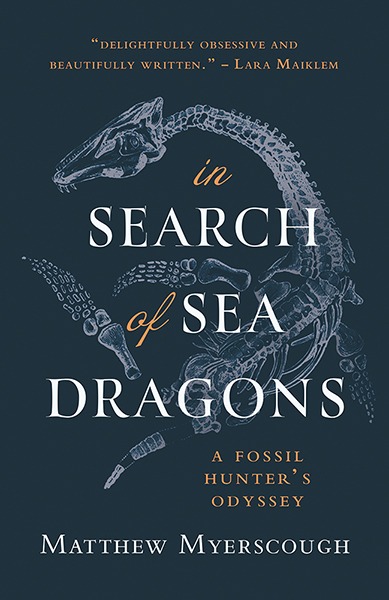
What precipitated Matthew Myerscough’s journey back through time to the Jurassic period, in a continuing search for paleontological enlightenment, was also a matter of life and death, an avalanche on Yr Wyddfa that almost buried the mountaineer on a winter's climb. Saved by extreme good fortune and the invaluable ministry of the rescue services, the moment was epiphanic for Myerscough. In Search of Sea Dragons is an autobiography of kindled obsession: initially fearful of returning to the mountains in which he almost died, and raddled with anxiety as to direction, the writer digs deep into his own imagination to rediscover the excitement and sense of anticipation that fired his youthful hunt for fossils, whilst on holiday with his father in Whitby.
Part inventory of his own odyssey since his ordeal on Snowdon, and part lyrical diversion, Myerscough’s book is an extraordinary read, blending meticulous research with an unexpected flair for description that naturally uplifts the text from any whiff of academic aridity. If the subject matter is prosaic, then this denizen of the beaches and coves of obscure parts of Wales, Somerset, Dorset and North Yorkshire breathes new life into old bones, or rather the rock formations that filled the gaps vacated by the bones over the countless millions of succeeding years. For Myerscough’s style is anything but prosaic, and he achieves something miraculous in the mix: by harmonising a real verve for subject with the means of elucidation, this glorious amateur brings a refreshing originality to his writing, lending it a pristine newness that echoes Gavin Maxwell.
The fascination seems entirely to justify the countless turgid hours, days and weeks in unmapped coves and bays, searching for elusive dinosaur footprints and Ichthyosaur skeletons, but mostly fragments thereof, amongst ‘lunar’ boulder-fields that restrict investigative perambulation to a snail’s pace. Often conducted in terrible, wintry weather conditions, over slippery rocks and gullies, or reached by means of abseil on friable cliffs prone to landslip, Myerscough’s excursions are magnified into epics by the scale of endurance. If they are measured by suffering, then his daily, often fruitless, journeys are a triumph of stoicism. Frequently taking place under duress – the impulse to preserve one’s ‘hoard’ against the depredations of the tide, and/or the attentions of rival fossil-seekers, has to be balanced with the demands of personal integrity – Myerscough’s humility breaks surface in his prose, emerging in moments of commendable honesty: respect for the ardent curiosity of the originators of fossil study, like Mary Anning of Lyme Regis, and for its present day exponents, some of whom he now regards as friends.
His sense of the aeonic past, and of the galvanic dynamism of the moment of discovery, bring ancient history into sharp relief. Becoming an amateur expert in the study of fossil-hunting, if without academic portfolio, Myerscough is to be commended for his thorough commitment to the science of his subject, here manifest in the terminology and Latinate jargon of the academy. Using an instinct for metaphor and an easy facility for natural description, the received effect of his approach is to be utterly persuaded of the efficacy of an interest that is niche at best.
And yet it is to the indirect, counter-intuitive moments, and there are many, that we return with relish: the writers skill at scene-setting, at leading the reader in by sensory overload, is estimable, preparing the ground for the hard hauling and carting that follows, securing a seductive birth before the storm. Myerscough’s description of the village of East Quantoxhead is a beautifully rendered and halcyon tribute to a little-known corner of Somerset, and it acts to sharpen our awareness of human finitude against the massive canvas of tectonic transition unfolding iron-slow beneath our feet:
‘It is the quintessential Somerset village where clusters of charming, thatched cottages with cream-coloured walls and crooked red brick chimneys line a small lane and a babbling brook. A place where tiny attic windows peep out from between thick, drooping mats of reeds and straw, and bright flowers bloom in cosy front gardens. The carpark in the field beside the church has an honesty box built into the wall and a small, covered stall that sells homemade juices in glass bottles, apple, beetroot and ginger. Opposite the carpark is the mill pond, a tranquil space with ducks and moorhens dabbling and diving, heads ducking beneath the water, feathered tails upended, rooting in the weeds.’
More information here.
Also by Steve Whitaker...
Poem Of The Week: Dicks By Eoghan WallsPoem Of The Week: Marky By Ian DuhigPoem Of The Week: Heredity By Thomas Hardy (1840-1928)Poem Of The Week: The Old Pantry By Peter Scupham (1933-2022)Review: There's No 'F' In Wonderful By Bill BroadyThe shortened address for this article is: newspub.uk/21zp7
Search Results