


search
date/time

Sat, 1:00PM
scattered clouds
17.8°C
SW 4mph
scattered clouds
17.8°C
SW 4mph
 | Sunrise | 4:47AM |
| Sunset | 7:43PM |  |
Christopher Paul Jones
Phobia Expert
P.ublished 15th August 2026
lifestyle
How To Manage Stress Caused By Events You Cannot Control

Image: Pixabay
This presents a particular psychological challenge. Someone frightened of spiders, dogs or flying may be able to avoid the trigger, at least temporarily. But you cannot personally stop a war, control the economy or determine what a leader will do next.
Fear is designed to protect us. When the brain detects a threat, it can increase our heart rate and breathing and release stress hormones to prepare the body to fight, flee or freeze. This is useful when immediate action is required. It becomes exhausting when the threat is vague, continuous and delivered through headlines, alerts and social media throughout the day.
Over time, this kind of stress can affect sleep, concentration, patience, relationships and decision-making. However, when anxiety is being driven by events outside your control, there are a number of steps that can help.

Image: Pixabay
There is a saying often used in twelve-step programmes: change what you can, accept what you cannot and develop the wisdom to know the difference.
Begin by dividing your concerns into three areas.
The first contains what you can control directly. This includes how often you check the news, which sources you use, how you look after yourself and what you choose to do today.
The second contains what you can influence. You may be able to vote, contact your MP, support a charity, help an affected individual, reduce your environmental impact or contribute to your community.
The third contains what concerns you but sits outside your control, including the decisions of governments, military leaders, financial markets and global institutions.
Many people spend most of their emotional energy in the third area while overlooking the first two. You do not need to stop caring about large problems. You need to recognise where your concern can become useful action and where repeated worry simply drains you.
Small actions will not solve every problem but they can loosen the paralysing belief that nothing you do matters.

Image: Pixabay
Write down everything you are worrying about. Do not edit the list or judge whether each concern is sensible. Putting worries onto paper helps you see them as separate thoughts rather than one overwhelming cloud.
Is this happening now, or am I predicting that it might happen?
Is there anything practical I can do about it?
Can I act now, or do I need to schedule an action for later?
If there is nothing I can currently do, what would continuing to think about it achieve?
A useful approach is what is sometimes called the Worry Tree. It helps you separate a solvable problem from a hypothetical “what if?” If there is something you can do, decide on the smallest useful action and when you will take it. If there is nothing you can do right now, recognise that repeatedly rehearsing the worry will not give you any more control.
Schedule your worry
People often believe that mentally rehearsing danger will prepare them for whatever happens. But repeatedly running the worst case through your mind can trigger the fear response and reinforce the anxiety without improving your ability to respond.
However, trying to ban worrying often makes it more persistent. Instead, give it an appointment.
Set aside ten minutes at a fixed time to go through your list. During the rest of the day, when a worry appears, write it down and remind yourself, “I will deal with that during my worry time.”
I sometimes suggest doing this somewhere deliberately uninviting. You might stand by the dustbins, in the utility room or in another mildly unpleasant place where you are unlikely to settle in for an hour.
Spend ten minutes saying or writing every worry. Sort each one into action, scheduling or acceptance. When the time is finished, physically leave that place and return to your day.
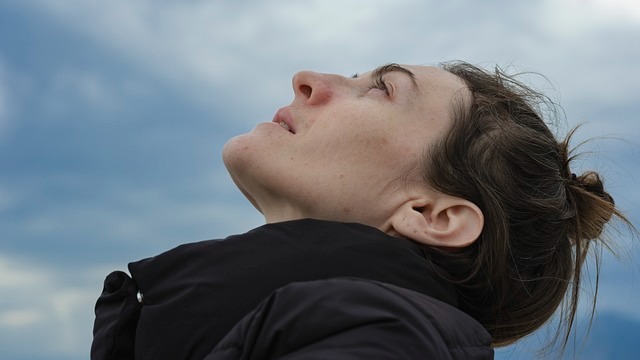
When your nervous system is highly activated, trying to debate with every thought can be difficult. Start by changing your physical state.
Breathe in gently for a count of four and out for a count of six. Repeat this for a minute or two without forcing the breath.
Then soften your gaze. Look ahead while becoming aware of what is at the edges of your vision. Notice the space around objects, the sounds in the room and the feeling of your feet against the floor.
Anxiety tends to narrow attention around a possible threat. Broadening your visual awareness, relaxing tense muscles, scanning the body and slowing the breath can help you move out of that tunnel.
You can also check where you are holding tension. Unclench your jaw, lower your shoulders, relax your hands and allow your breathing to become slower and easier.
These may seem like small changes, but your body and mind are part of the same system. Changing one can begin to influence the other.
Control your information intake
Being informed can help you make decisions. Compulsively checking the same story rarely gives you greater control.
Choose one or two reliable sources and check them at planned times. Turn off unnecessary alerts. Avoid beginning and ending every day with breaking news.
Ask yourself whether you are learning something useful or repeatedly seeking reassurance that nobody can provide.
When the information gives you a sensible action, take it. When it adds no new action, continuing to consume it may simply keep your body in a state of alert.
Return to your life
After you have taken the action available to you, give yourself permission to return to ordinary life.
Spend time with people you care about. Exercise, work, rest, laugh, walk in nature and make plans.
Enjoying your life does not mean you are indifferent to suffering or uncertainty. It preserves the emotional resources you need to respond thoughtfully and help where you can.
You cannot control every event in the world. You can influence what you give your attention to, how you respond physically, the meaning you attach to what you see and the actions you take within your own sphere.
Stay informed enough to act. Stay grounded enough to live.
.jpeg)
Christopher Paul Jones
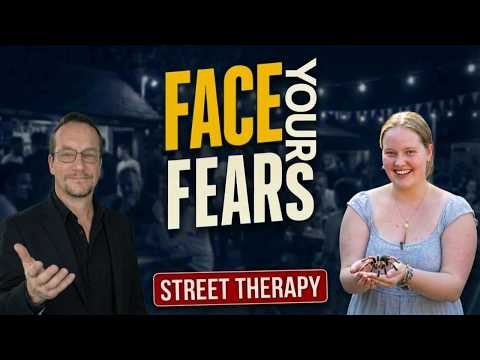
See Christopher in action curing a spider phobia -
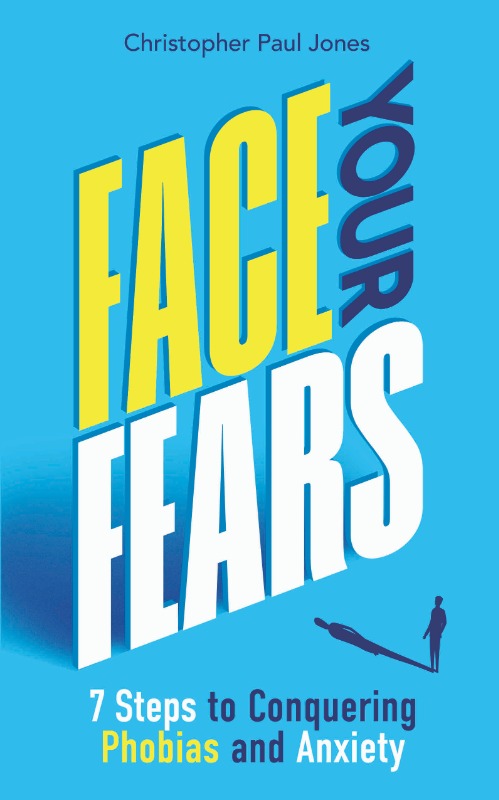
Book “Face Your Fears”: https://www.amazon.co.uk/Face-Your-Fears-Conquering-Phobias/dp/1789295327
The shortened address for this article is: newspub.uk/220gg
Search Results