


search
date/time

Sat, 7:00AM
few clouds
12.7°C
S 1mph
few clouds
12.7°C
S 1mph
 | Sunrise | 4:34AM |
| Sunset | 7:58PM |  |

Artis-Ann
Features Writer
P.ublished 14th March 2026
arts
Choices Are Never Easy: Birnam Wood By Eleanor Catton
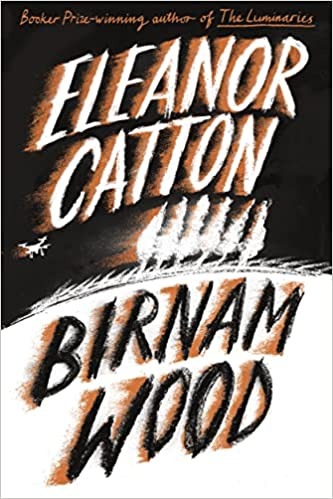
As so often happens, the opening pages introduce the characters: Mira is the principal protagonist and de facto leader of the collective which is known as Birnam Wood and which is ‘on the move’ – ah, that may be the link to the Bard; her friend Shelley, who at the start has become somewhat disillusioned with the group, harbours deep-seated resentments against Mira and is plotting her escape. The wealthy Owen Darvish and his wife, soon to be Lady Darvish, have done very well from their pest control business, and, of course, there is Tony, a founding member of Birnam Wood, and aspiring journalist who is back from travelling and teaching English in Mexico. He has fond memories of his leaving party and his tryst with Mira, despite there having been no contact between them in the intervening four years. He has a secret (of course), namely vast inherited wealth which is belied by his carefully constructed appearance. When the billionaire Robert Lemoine enters the fray, his commanding presence cannot be ignored.
The tension builds gradually to an unexpected explosive and exciting ending, a truly bloody crescendo – yet another link to the Bard’s work, perhaps.
In brief, the novel is set in New Zealand. Mira is the founder of a collective gardening group, a group of idealistic twenty-somethings who plant their crops on neglected plots of land, not caring if they are trespassing or not. They are anti-capitalist with a strong anarchic streak and their idealism sees nothing wrong in using land which is being wasted and hoarded by wealthy people who don’t appear to care.
They struggle to get by, selling what produce they can, living frugally and investing any spare income in the collective, to buy tools, supplement seeds etc. When a deadly landslide leaves a particular piece of land isolated, Mira thinks their problems are over. The property is an abandoned farm located in the fictional town of Thorndike, by the Korowai pass, and is ripe for planting. However, Birnam Wood are not the only ones interested in the place. Robert Lemoine, an American drone-building billionaire, is looking for a site for his end of the world bunker and sees the possibilities. He has enough money to believe he can buy (and control) anyone and anything he wants and he is about to butt heads with others in the cast. Lemoine proposes to share the place but while his offer means they can grow and be secure, he represents everything their anti-capitalist group despises. Darvish wants Lemoine’s technology for his own purposes and courts him despite the danger. When a suspicious Tony realises Lemoine has a more sinister, hidden agenda, he decides to expose him – risky to say the least. Each character has their own reason for behaving as they do and it seems no-one is completely honest.
Lovers of crime novels will find plenty to enjoy but there are also plenty of philosophical discussions about controversial themes...
The novel is part social satire, part eco-thriller. Lovers of crime novels will find plenty to enjoy but there are also plenty of philosophical discussions about controversial themes such as collectivism, capitalism and climate change, delivered in exchanges between the characters, in several long speeches and one very long speech.
In fact, Catton takes her cues from Shakespeare’s play, focusing on the fatal flaws of individuals, the ambitions and personal desires which, like Macbeth, ultimately lead her cast to their downfall.
On a purely personal note, I did find it a little off-putting that the narrative is not broken down into chapters; the whole novel is divided into three very long sections of pretty much equal length and I often found myself asking where I could stop reading and on picking it up again, where I should start? It’s better read in longer chunks in order to grasp more securely both the characters, their motivations and relationships, and the action.
Also by Artis-Ann ...
The Power Of One Voice: Camino Ghosts By John GrishamThe Graveyard Shift: The Dacre Dilemma By Rebecca TopeNow You See It, Now You Don’t: GRQ By Steven BernsteinIn The Dark, Hiding: Love after Love By Ingrid PersaudA Bit Of A Lark! The Impossible Fortune By Richard OsmanThe shortened address for this article is: newspub.uk/21ypq
Search Results