


search
date/time

Mon, 1:00PM
overcast clouds
15.7°C
SE 7mph
overcast clouds
15.7°C
SE 7mph
 | Sunrise | 3:36AM |
| Sunset | 8:46PM |  |
P.ublished 15th June 2026
business
Opinion
Why Ranking On Google Is No Longer The Whole Game For Businesses
By Danny Sullivan, Nomada Digital

Danny Sullivan
How buyers actually find businesses now
What’s happening is that people used to type a question into Google, scan a list of links, click one, and decide. And while plenty still do this, the first move is increasingly different. Instead, they either open an AI tool such as ChatGPT and ask it directly, or they read the AI-written summary that now sits at the top of Google’s results (the bit Google calls AI Overviews) and they get a straight answer. This often includes a recommendation of who to use, without the need to click through to a single website, which is why many businesses are experiencing a drop in website traffic.
This means that if your business isn’t named in that answer, you’re not just further down a list someone might scroll, you’re not in the conversation at all. You’ve become invisible at the exact moment a buyer is deciding who to consider, and they never even see you to rule you out. The uncomfortable part is that many business owners have no idea whether they show up in those answers or not.
Try the five-minute test
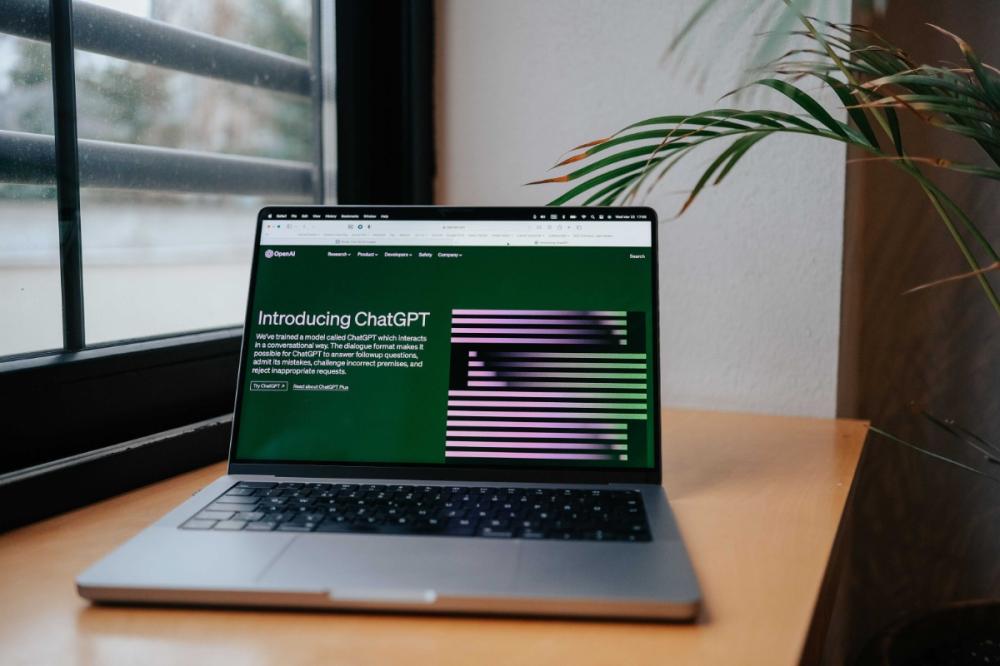
It’s worth opening ChatGPT, or running a Google search where you get one of those AI Overviews, and asking a question your customers would actually ask, such as: “Who are the best [what you do] in [your area or sector]?” This will allow you to see whether you come up and who else does. It takes five minutes, and it’s usually a sobering exercise because the businesses being recommended aren’t always the best ones, they’re the most visible ones.
There’s a lot of noise on this subject, so it’s easy to get overwhelmed by details and jargon, but the key thing to note is that search hasn’t gone away, and Google ranking hasn’t stopped mattering. The mistake is in thinking that it’s the whole game now.
Search has expanded, not disappeared, which means a single B2B buying decision today runs across 10 or more touchpoints and at least four different platforms – think Google, ChatGPT, Bing, LinkedIn, Reddit, press, your own website. If you're visible in only one of them, you're missing most of the journey your customer is on. That’s why cross-platform visibility is so crucial for modern businesses, and despite how it sounds, it isn’t complicated.
Having cross-platform visibility means being present, and being credible, in the places your customers look. It matters now for exactly the same reason ranking on Google has always mattered: it’s where the decision is being made. The only thing that’s changed is that the decision is now made across several places at once. So the real shift in thinking is to stop treating your visibility as a list of separate jobs – a bit of SEO, some sporadic press commentary, and an ad when things are quiet – and start asking whether all of it adds up to a presence everywhere a customer might be looking.
The good news is these channels reinforce each other. Get visible across the right ones in the right order and they compound, each one making the next more effective, which is something you never get from being visible in just one place.
Why some businesses show up and others don't
At this point, you may be thinking, okay but how do these AI tools decide who to recommend? And this is the bit most businesses get wrong.
AI tools don’t invent opinions about who’s good, they repeat what they can find evidence for. They point people towards the businesses that look credible to them – the ones written about in publications people trust, the ones with a consistent presence across the web, the ones the wider internet already treats as an authority in their field. Showing up in AI answers isn’t a setting you switch on, it’s about being a well-regarded business that’s been made readable to the machines that are now doing the recommending. Essentially, the authority you build in the real world is exactly what these tools read.
We recently took a client from 0% to 20% visibility in ChatGPT in a single week, using one well-placed piece of content and one credible, third-party mention. Also, in some of the accounts we work on, the traffic that arrives via AI tools converts at up to eight times the rate of standard Google traffic – because by the time someone clicks through, the tool has effectively already vouched for you. I see the same pattern whether the business is in the North or the South of England, even with our clients across the Atlantic in New York. The platforms don’t care about your postcode, they care about whether you’re a credible answer to the question being asked.
Where to start
None of this means tearing up what you’re already doing. You just need to take stock, optimise, and build on top of it, in the right order, so it adds up to a presence across the whole journey, not just one corner of it.
It does, however, mean being honest with yourself about three things. Firstly, whether you currently show up when an AI tool is asked to recommend a business like yours (the five-minute test above will tell you). Secondly, whether your marketing adds up to a presence across every place a customer looks, or just a few disconnected efforts. And thirdly, the trickier one, whether the businesses being recommended ahead of yours are genuinely better, or are simply more visible across more platforms. In my experience, it’s almost always the second.
Your customers haven’t stopped looking for businesses like yours, they’ve just changed where they look, and how they decide, so the only real question is whether you’re there when they do.
Danny Sullivan is Founder and CEO of Nomada Digital, a B2B search and cross-platform visibility agency based in York, working with clients across the UK and New York.