


search
date/time

Sat, 4:00PM
overcast clouds
17.8°C
SSW 5mph
overcast clouds
17.8°C
SSW 5mph
 | Sunrise | 4:46AM |
| Sunset | 7:31PM |  |
P.ublished 24th April 2026
frontpage
Two In Five Children Locked Out Of Live Music As Cost And Location Barriers Create Growing Divide
Playground Proms
The study, which surveyed 1,000 state school children aged 7–11, found that 40% have not seen live music in the past year, highlighting a widespread gap in access to cultural experiences.
Exposure varies significantly depending on where children live. In Greater London, 68% of children have seen live music, compared to just 54% in Yorkshire and The Humber. Most other regions sit between 50% and 57%, reinforcing a clear postcode lottery in access to live performance.
Among children who have not attended live music, cost and distance are the dominant barriers in Yorkshire and The Humber, with 39% saying tickets are too expensive and 33% saying events are too far away or difficult to get to.
There is also strong unmet demand for playing instruments. More than one in four of the region’s children (26%) do not have access to a musical instrument they can practise on. Access is heavily dependent on schools, with 49% using instruments at school compared to 43% at home.
Playground Proms
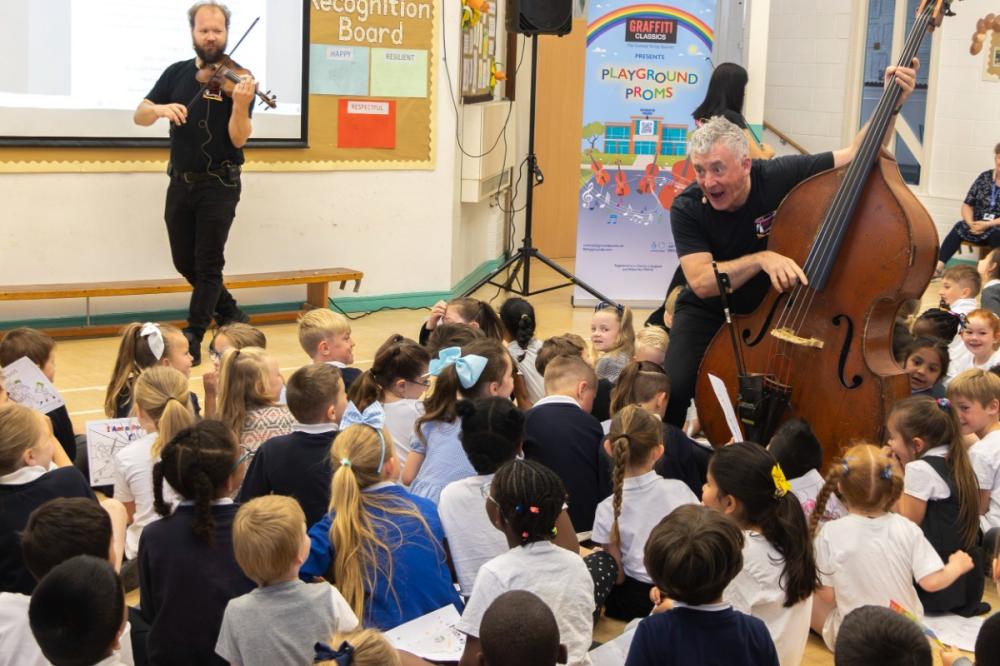
The survey reveals that children recognise a small set of familiar instruments by sound well, but knowledge drops sharply beyond this. For some instruments, more than one in five children say they don’t know what they are hearing, pointing to gaps in exposure to live music rather than just knowledge. While 96% of children in Yorkshire and The Humber can identify a piano by sound, just 30% can identify a saxophone. Uncertainty is also high for less familiar orchestral instruments, with 39% unable to identify a flute by sound and 46% not able to identify the double bass.
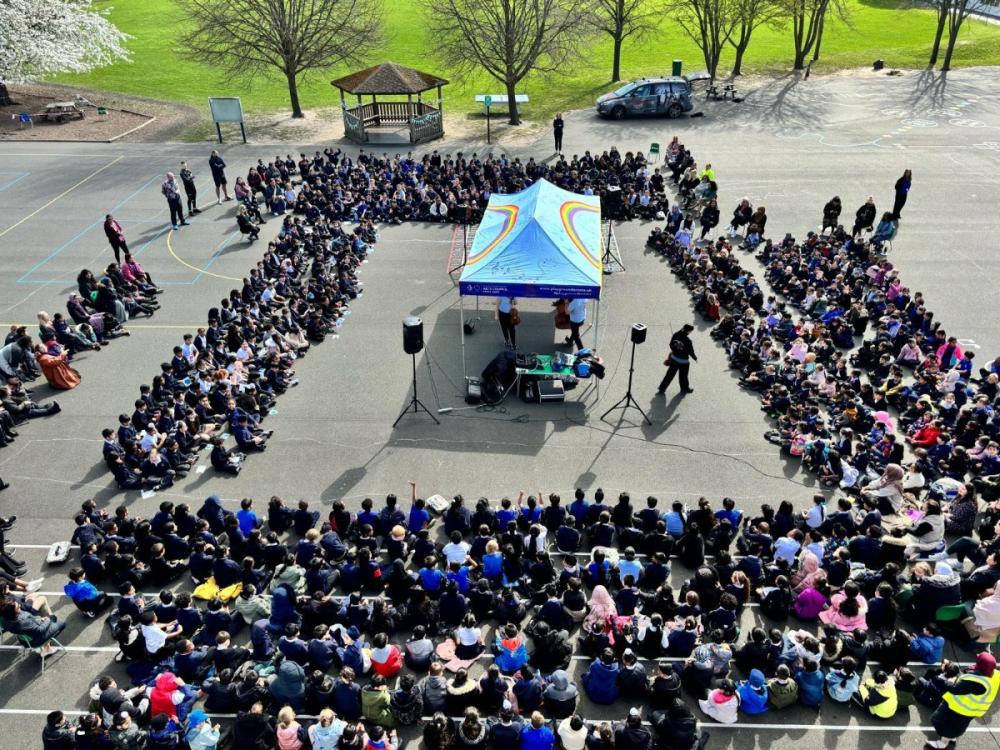
The research comes as Playground Proms announces its largest UK tour to date, supported by Arts Council England funding. Inspired by the BBC Proms, the project is designed to tackle these access gaps by bringing high-quality live classical music directly into state primary schools, particularly in areas where opportunities to experience live music are more limited.
The programme also includes intergenerational visits, bringing children into care homes to perform and share music with older residents, helping to tackle isolation while building confidence and connection across generations.
In 2026 the initiative will reach 63,000 children, delivering workshops across 15 UK areas with 18 regional stops. Since launching, the programme has already reached around 150,000 children in over 500 schools, expanding year-on-year.
The findings show that children’s perceptions of classical music are still being formed. Around 22% of those surveyed in Yorkshire and The Humber say it makes them feel relaxed, 24% say they like it and 16% say it makes them happy, while 20% describe it as clever or impressive. However, 22% describe it as ‘boring’ and 18% as ‘for old people’, while 4% say it is ‘for people with money’ and ‘not for people like me’. A further 17% say they don’t know much about it, suggesting unfamiliarity - rather than dislike - is shaping many views.
Cathal Ó Dúill, founder of Playground Proms, said: “Our new research exposes a stark reality - too many children are being locked out of music in the UK. When nearly half of children are missing out on live music because of cost and where they live, that is not a cultural gap, it’s a systemic failure.
At a time when music provision is under pressure in schools, the government needs to act on the election promises it made to ensure that all children receive high quality music education. A-level music entries in England have fallen by 45% and GCSE music by 26% since the introduction of the EBacc in 2010, and when access increasingly depends on geography and funding, we risk entrenching these inequalities even further – already, less than 2 percent of current performers in UK orchestras are from the global majority. Without intervention, a generation of children will grow up without meaningful access to music that is proven to support confidence, wellbeing and academic engagement.
Playground Proms
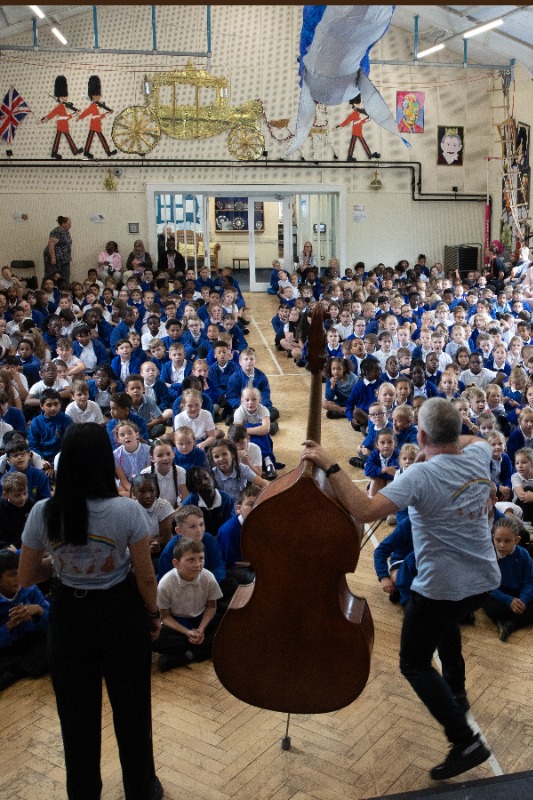
Founded in 2021, Playground Proms delivers interactive classical music workshops in state primary school playgrounds, removing barriers linked to cost, transport and location. Using Dalcroze-informed techniques, each visit combines live performance with hands-on learning, introducing core musical concepts such as rhythm, conducting and composition, alongside well-known classical repertoire. Children actively take part, including creating and performing their own music, building both confidence and understanding.
Ahead of each visit, schools receive resource packs for teachers and pupils, alongside CPD sessions to help teachers embed music more confidently in the classroom and extend the impact beyond the workshop.