


search
date/time

Mon, 1:00PM
few clouds
16.2°C
SW 4mph
few clouds
16.2°C
SW 4mph
 | Sunrise | 4:38AM |
| Sunset | 7:54PM |  |
P.ublished 18th April 2026
lifestyle
Stress Awareness Month - Not All Stress Is Bad. Without It, We Won't Grow
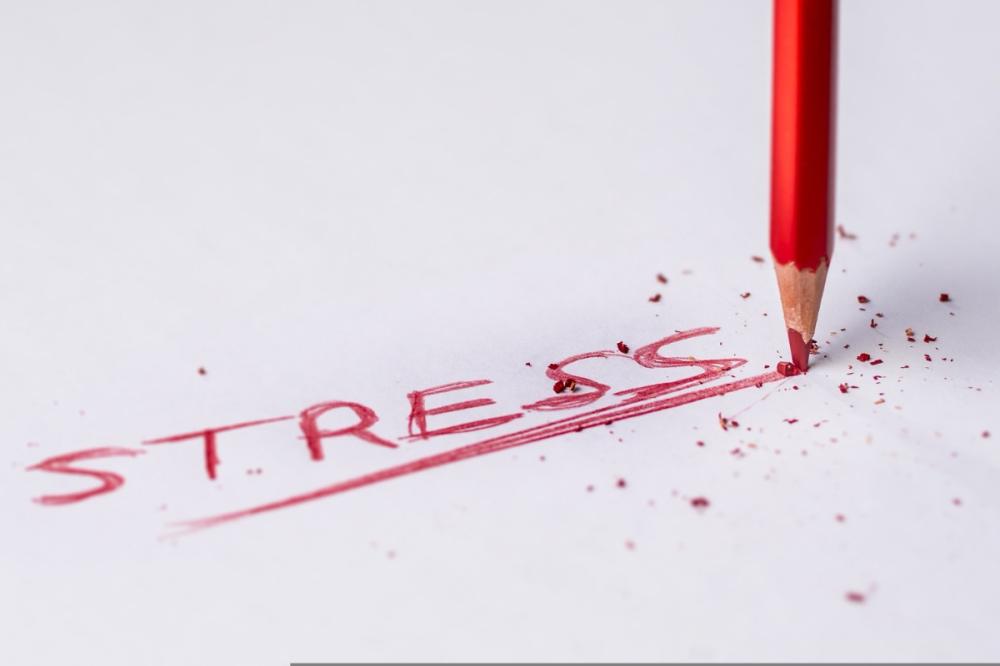
Image by Pedro Figueras from Pixabay
Drew Povey, author and founder of the Drew Povey Consultancy, says it’s time that we shrug off the view that all stress is bad and instead use it to achieve our full potential.
His advice comes amid Stress Awareness Month which this year focuses on Mahatma Gandhi's famous quote.
He urged people to “Be the change you want to see in the world”.
Echoing that sentiment, Drew says it’s time to stop trying to escape stress, and concentrate on channelling it to help you hit your goals.

Dean Povey
“I honestly think stress doesn't deserve the reputation it's given.
“Because the absence of stress won't be calm. The danger of not having any stress could be stagnation.
“Some of the sharpest decisions and biggest breakthroughs come about not despite stress, but because of it.
“History is full of amazing inventions which came about through stressful situations: the jet engine, EpiPens, blood banks – even supermarkets. They were all developed to combat difficult situations. And where would we be without them?
“Admittedly the stress we face might not be impending war or a medical emergency, but the principle of ‘necessity is the mother of invention’ has been true throughout our history.
“So when we look at stress, the question shouldn’t be ‘how do we reduce it’ but ‘how can we use it better?’
Here are Drew’s five ways to use stress positively
Reframe the feeling
Stress is often the interpretation before something becomes real, and it’s always remembering that what overwhelms one person, or is one person's problem, will excite another.
So the moment that we label something as a threat rather than an opportunity, we are limiting the possibility of a rewarding or successful outcome.
Stress and excitement are, in terms of our brain, nearly identical. The difference is how it is processed.
The best leaders I’ve worked with, including CEOs of blue chip companies, talk about reframing their mindset towards these difficult moments to use the adrenaline for good.
By reframing a ‘stressful’ situation as a challenge, we can allow ourselves to achieve more by allowing our brain to focus on reward.
Use stress as a signal, but not as a stop sign.
Stress is very often feedback. It's your system telling you that this matters. When you get nervous that's a good thing, because it means you care. If you didn't care, that would be a bigger worry.
It means this situation is going to stretch you, and the mistake is seeing that as a reason to step back. In fact, the opportunity is to go towards it, to eyeball it, and to become aware of it.
Often, the edge of stress will be the edge of growth.
Use stress to train yourself
You don’t see gains at the gym by doing the same weights over and over again. You see gains by pushing yourself out of your comfort zone, breaking down those muscle fibres so they grow back stronger.
It's exactly the same in leadership. The difficult conversations, big decisions and all the uncertainty that comes with it, handled repeatedly, they're not going to break you, they're going to build you, just like you would in the gym.
In sports we increase the levels of stress on a players, perhaps by having background noise and flares, maybe by putting more numbers in the opposition. It’s about using that increased pressure to prepare you for the big moments and learn how to adapt and grow.
Let stress sharpen your thinking
When we put pressure on ourselves, it creates focus. Tendency to procrastinate? Make a list. Essay to hand in? Set a deadline.
Without that pressure of some description, focus can wane and we drift. Productivity can fall off a cliff.
So whether we put a deadline in or a leader creates an expectation or a very clear line of accountability, these things force clarity both for an individual or within a team.
It means you have to cut through the noise and focus on what really matters now.
Know the difference between stress and distress
Not all stress is the same. Stress can elevate a performance, whereas distress will erode it.
The skill isn't about eliminating pressure, it's about managing perspectives. It's about managing the balance, and it's about managing the recovery and it’s about knowing when to push.
But it’s also about knowing when to pause.
Just as in the gym we push ourselves to grow muscles, the flip side of that is that we must give those muscles time to recover. And in any high performance environment success does not come from constant intensity but in knowing when to apply the brakes.
It’s the intensity followed by the rest that produces the growth.
This Stress Awareness Month don't just ask, How do I reduce stress? I think we should ask something better, which is, how do I use stress to my advantage?
The shortened address for this article is: newspub.uk/21z4a
Search Results