


search
date/time

Mon, 12:00AM
light rain
5.1°C
W 17mph
light rain
5.1°C
W 17mph
 | Sunrise | 6:26AM |
| Sunset | 6:13PM |  |

Graham Read
Formula 1 Correspondent
P.ublished 15th March 2026
sports
Mercedes Dominate In China As April’s Grands Prix In Middle East Cancelled
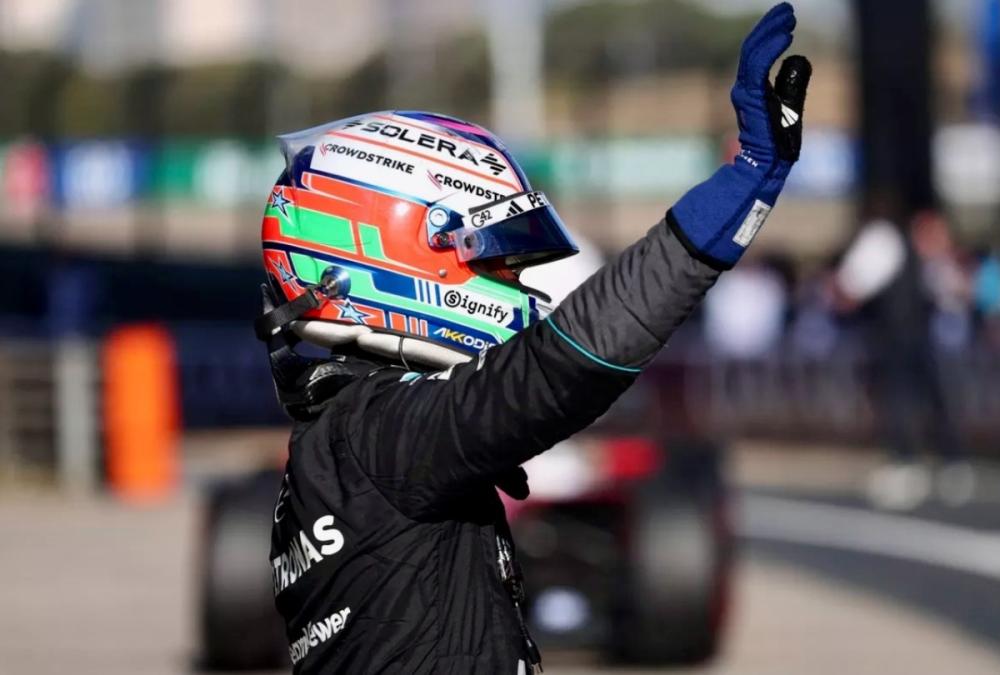
Kimi Antonelli claimed a superb lights-to-flag Grand Prix victory from pole position
This weekend’s Shanghai venue, opened back in 2004 at a cost of US$240 million, is a permanent race track, unlike the temporary circuit used a week earlier for the Australian Grand Prix in Melbourne’s Albert Park, and is located in the Jiading District of this vast Chinese city, which has approximately 25 million residents.
The Chinese paddock, reflecting the wider motorsport world, was awash with chatter about whether the Australian race had resembled a proper Grand Prix or simply a computer game on wheels, with the cars for the first time ever now having pretty much a 50/50 split between petrol and electrical power sources and buttons labelled 'boost' and 'overtake' to briefly add to the propulsion from the internal combustion engines.
Since 2014 F1 cars have actually had battery power to supplement their petrol engines, but the level has always been fairly limited compared to now. This change has been partially driven by the automotive world being keen to have Formula 1 reflect its own ever-increasing use of hybrid power, and Australia was all about drivers repeatedly using their boost and overtake buttons to sweep past an opponent before quickly having to slow and lift and coast to replenish their batteries, thereby increasing the number of overtakes, if in a very artificial way.
This has left most drivers with understandable concerns about the direction F1 car design has gone re safety. On the plus side, the cars are smaller, lighter, nimbler, and more visually appealing; however, most drivers share significant concerns about their own safety and that of those trackside, with McLaren’s reigning champion, Lando Norris, being the most vocal critic. Understandably, he is particularly concerned about the increased speed differentials between cars as they either use boost and overtake settings to briefly go faster or are slowed by electrical regeneration to top up their batteries, with this happening during every single lap of the race. Starts are also now a major safety issue due to the increased danger with cars accelerating off the grid at unpredictably differing speeds due to varying levels of retained battery power. In Melbourne many drivers had lined up on the grid with seriously depleted batteries due to issues about managing them during the formation lap as they accelerated and braked hard, as usual, to get heat into their tyres and brakes.
Norris has predicted that there will be “a big accident” and that F1 is “just waiting for something to go horribly wrong” due to the noticeably higher risk of having a collision with the car ahead, with the following one flying into the air and potentially launching over the trackside fencing into areas packed with marshals and fans. Norris rightly suggests this would cause “a lot of damage to yourself and maybe others too.” Interestingly, the former F1 driver and long-time widely respected commentator and pundit, Martin Brundle, has fully agreed with Norris and believes that change really is needed on the safety front. Most drivers have supported Norris and Brundle, although Russell, who won in Australia, disagreed with his fellow British driver, accusing Norris of hypocrisy, adding, “If he was winning, I don’t think he would be saying the same!” In contrast, Red Bull’s multiple champion, Max Verstappen, is in full agreement with Norris and Brundle, clarifying that he still loves racing, but not in the form Formula 1 has opted to follow for now at least.
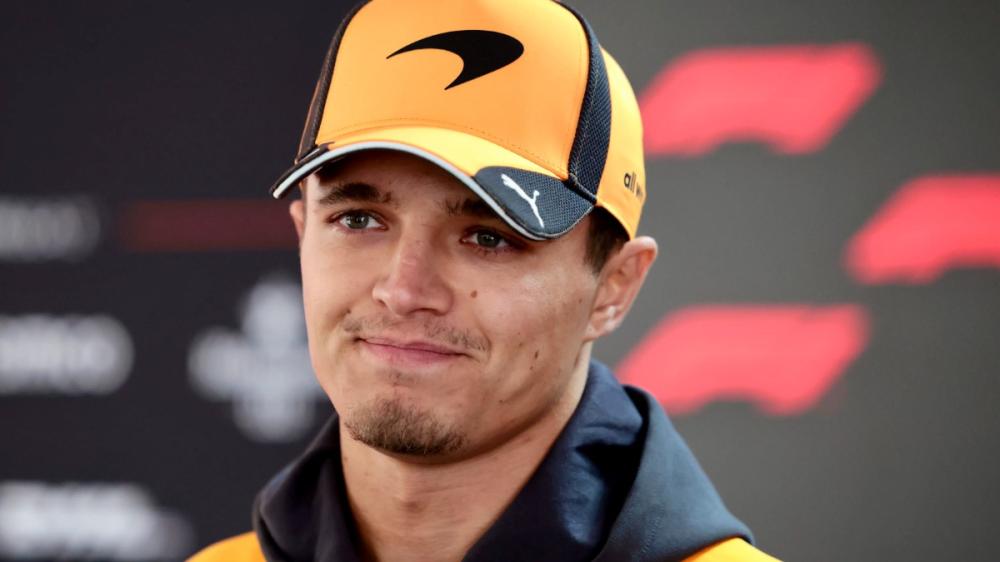
The reigning world champion, Lando Norris, feels that the new regulations need changing to improve safety
The 19-lap sprint encounter was a lively little affair, which ultimately resulted in Russell leading the Ferraris of Charles Leclerc and Lewis Hamilton to the chequered flag, but there was more drama to follow for the British driver from King’s Lynn during the subsequent qualifying hour for the Grand Prix. Seeking a further pole position start, Russell’s W17 car ground to a halt trackside early in Q3 with a control systems glitch, and he had to limp slowly back to the pits before Mercedes got him back out onto the circuit for a last-minute final attempt. He set the second-fastest time behind Antonelli, who became the youngest-ever Grand Prix polesitter in F1 history, claiming a record held since 2018 by Toro Rosso’s Sebastian Vettel.
This left the pair of Mercedes cars set to start just ahead of both Ferraris, and a brief description of the Grand Prix would be to state that Antonelli led Russell, Hamilton and Leclerc off the grid before, an hour and a half later, leading the same three drivers to the chequered flag in exactly the same order. It’s true that the fastest Ferrari finished a mighty 25 seconds behind the victorious Mercedes, but along the way there was plenty of close racing to enjoy, particularly between the two red and white cars from Maranello, who were allowed to fight each other hard.
By mid-race distance the cars of Antonelli and Russell led Leclerc and Hamilton, and it was game over out front as Mercedes proved to be in a class of their own. However, the entertaining squabble between the Ferrari drivers continued until the seven-time champion, Hamilton, made the final podium position his own.
There was more to the Grand Prix, though, than who finished in the top four, as, dramatically, a quartet of cars failed to even start the race due to technical issues, namely both McLarens, Gabriel Bortoleto’s Audi and the Williams due to be pedalled by Alex Albon. Later, the Aston Martin cars of Lance Stroll and Fernando Alonso were forced into retirement by lap 34, with the Spanish former champion explaining that vibrations through his steering wheel were making him lose feeling in his fingers. On a more positive note, Haas’ young British driver, Oliver Bearman, put in a fine effort to finish fifth ahead of sixth-placed Pierre Gasly for Alpine.
So, next up comes a visit to Japan’s iconic figure-of-eight Suzuka circuit in a fortnight’s time as Formula 1 follows its long-arranged racing schedule ontrack, while also seeking to deal offtrack with the ongoing criticism of various safety-related aspects of its radical new technical regulations introduced at the start of this season. We all want to see Formula 1 retain its position as the peak of world motorsport, with state-of-the-art, technically very advanced cars producing close racing action, but which doesn’t feel like a glorified and at times dangerous high-speed computer game.
Due to next month’s cancellations, the 2026 Formula 1 season has now been officially reduced from 24 race weekends to 22, and there will be a five-week gap between the Japanese Grand Prix on 29 March and the Miami round, including a sprint, in early May. This period will provide an excellent window of opportunity for any changes to the new regulations to be agreed and implemented.
1 Kimi Antonelli (Mercedes) 1hr33m15.037s
2 George Russell (Mercedes) +5.515s
3 Lewis Hamilton (Ferrari) +25.267s
4 Charles Leclerc (Ferrari) +28.894s
5 Oliver Bearman (Haas) +57.268s
6 Pierre Gasly (Alpine) +59.647s
7 Liam Lawson (Racing Bulls) +1m20.588s
8 Isack Hadjar (Red Bull) +1m27.247s
9 Carlos Sainz (Williams) Lapped
10 Franco Colapinto (Alpine) Lapped
11 Nico Hülkenberg (Audi) Lapped
12 Arvid Lindblad (Racing Bulls) Lapped
13 Valtteri Bottas (Cadillac) Lapped
14 Esteban Ocon (Haas) Lapped
15 Sergio Pérez (Cadillac) Lapped
16 Max Verstappen (Red Bull) Retired
17 Fernando Alonso (Aston Martin) Retired
18 Lance Stroll (Aston Martin) Retired
19 Oscar Piastri (McLaren) Did not start
20 Lando Norris (McLaren) Did not start
21 Gabriel Bortoleto (Audi) Did not start
22 Alex Albon (Williams) Did not start
1 George Russell (Mercedes) 33m38.998s
2 Charles Leclerc (Ferrari) +0.674s
3 Lewis Hamilton (Ferrari) +2.554s
4 Lando Norris (McLaren) +4.433s
5 Kimi Antonelli (Mercedes) +5.688s
6 Oscar Piastri (McLaren) +6.809s
7 Liam Lawson (Racing Bulls) +10.900s
8 Oliver Bearman (Haas) +11.271s
9 Max Verstappen (Red Bull) +11.619s
10 Esteban Ocon (Haas) +13.887s
11 Pierre Gasly (Alpine) +14.780s
12 Carlos Sainz (Williams) +15.753s
13 Gabriel Bortoleto (Audi) +15.858s
14 Franco Colapinto (Alpine) +16.393s
15 Isack Hadjar (Red Bull) +16.430s
16 Alex Albon (Williams) +20.014s
17 Fernando Alonso (Aston Martin) +21.599s
18 Lance Stroll (Aston Martin) +21.971s
19 Sergio Pérez (Cadillac) +28.241s
20 Nico Hülkenberg (Audi) Retired
21 Valtteri Bottas (Cadillac) Retired
22 Arvid Lindblad (Racing Bulls) Retired
1 George Russell 51
2 Kimi Antonelli 47
3 Charles Leclerc 34
1 Mercedes 98
2 Ferrari 67
3 McLaren 18