


search
date/time

Tue, 1:00AM
overcast clouds
15.9°C
SSW 1mph
overcast clouds
15.9°C
SSW 1mph
 | Sunrise | 5:56AM |
| Sunset | 6:11PM |  |
P.ublished 4th July 2026
nature
Get Your Lawn Wimbledon And World Cup Ready This Summer

Image by StockSnap from Pixabay
Seeding like a pro
Most lawns come out of winter looking a bit sorry for themselves. Whether it’s from heavy foot traffic, waterlogging or just the general wear and tear of a British winter or wet spring, bare and thin patches are completely normal and completely fixable. The first thing to think about is getting the right seed for the job. If your lawn takes a battering from kids and dogs, go for a hard-wearing sports or family mix. If you’re after a fine, dense lawn that photographs well, look for a fescue-based blend.
Once you’ve got your seed, rake the bare patches back to bare soil, give them a light scratch over with a fork to rough up the surface, and firm it down with your foot. Sow at the rate on the packet and rake it in gently and tamp it down. Water morning and evening until you see germination, which usually takes one to two weeks. Try to keep off it for a month, and a light top-dressing of fine lawn compost will help retain moisture and give the seed the best possible start.
Earn those stripes
Those famous Wimbledon stripes aren’t some dark art; they are the result of a well looked after lawnmower and a bit of discipline. The golden rule of mowing is little and often, so during the growing season, aim to cut every five to seven days and never take off more than a third of the blade height in one go. Scalping the lawn, or cutting it too short, is one of the most common mistakes people make, and it stresses the grass. Set your cutting height to around 25 to 35mm for a smarter lawn, or 40 to 50mm if it’s a family lawn or the weather’s been dry.
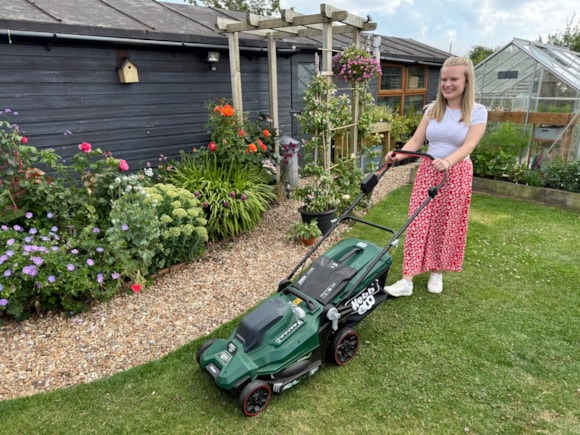
Eve mowing
Photo: BGC
Weed out the competition
Dandelions, clover, plantain, and creeping buttercup have all had a good spring, and by June, they’re well established and starting to set seed. Get on top of them now, and you’ll save yourself a much bigger job later in the summer.
Pick by hand or use a hand fork, which lets you get the whole root out cleanly, which is important with dandelions, where even a small piece of root left behind will regrow. For a lawn that’s more weeds than grass, a selective lawn weedkiller is the practical solution, as these products target broad-leaved weeds without harming the grass. A weed and feed granule mix, which tackles weeds and fertilises the lawn at the same time, is a good option if you want to kill two birds with one stone.
If moss is your issue rather than weeds, treat it with a ferrous sulphate-based moss killer first. Once it’s blackened and died off, you can scarify it out and overseed any thin areas. Whatever you use, stick to the label instructions and avoid treating a newly seeded area or applying anything during a drought.
Feed your lawn like a champion
A lawn that’s never been fed is like a footballer who’s never been to the gym. It might get through the season, but it won’t look or perform at its best. Feeding in early summer, like May or June, is when it really counts, giving your grass the nutrients it needs to grow thick, green and resilient through the hottest months.
Look for a lawn fertiliser that’s high in nitrogen, which drives leafy green growth, and lower in phosphate. Granular fertilisers are the easiest to apply; use a spreader if you have one, because hand-casting tends to leave patchy results. Slow release formulas are worth considering if you’d rather not think about it again for a couple of months. Too much nitrogen produces soft, sappy growth that’s more susceptible to disease, and always water granular feed in if there’s no rain on the way within 48 hours.
Half-time hydration
British summers can be unpredictable, either it rains all of June, or we get a two-week heatwave just as Wimbledon starts. The most common mistake is watering a little every day, as it encourages shallow roots that make the grass more vulnerable to drought. For an established lawn, watering two or three times a week is plenty, and let the soil dry out a little between sessions, and the roots will go looking for moisture deeper down, which is exactly what you want. The only exception is a newly sown lawn, where you do need to keep the top layer consistently moist until the seed has germinated.
When you water, do it in the morning so the water soaks in before the sun comes out and evaporates it off the surface, and the grass blades have all day to dry out before nightfall. If you want to be smarter about conserving water, use a soaker hose or drip system rather than a sprinkler, as it delivers the water straight to the roots where it’s needed. Putting any sprinkler on a timer is a simple way to stop it from running longer than necessary. If you want to know if your lawn needs watering, walk across the grass and look back. If your footprints stay flat rather than springing back, the lawn is telling you it’s thirsty
The shortened address for this article is: newspub.uk/22004
Search Results