


search
date/time

Fri, 9:00PM
overcast clouds
6.4°C
SSW 2mph
overcast clouds
6.4°C
SSW 2mph
 | Sunrise | 6:13AM |
| Sunset | 6:23PM |  |

Helen Kitchen
Deputy Business Editor
P.ublished 19th March 2026
frontpage
First-Time Buyer Average Age Rises To 34 Across England
Credit: Skipton Group
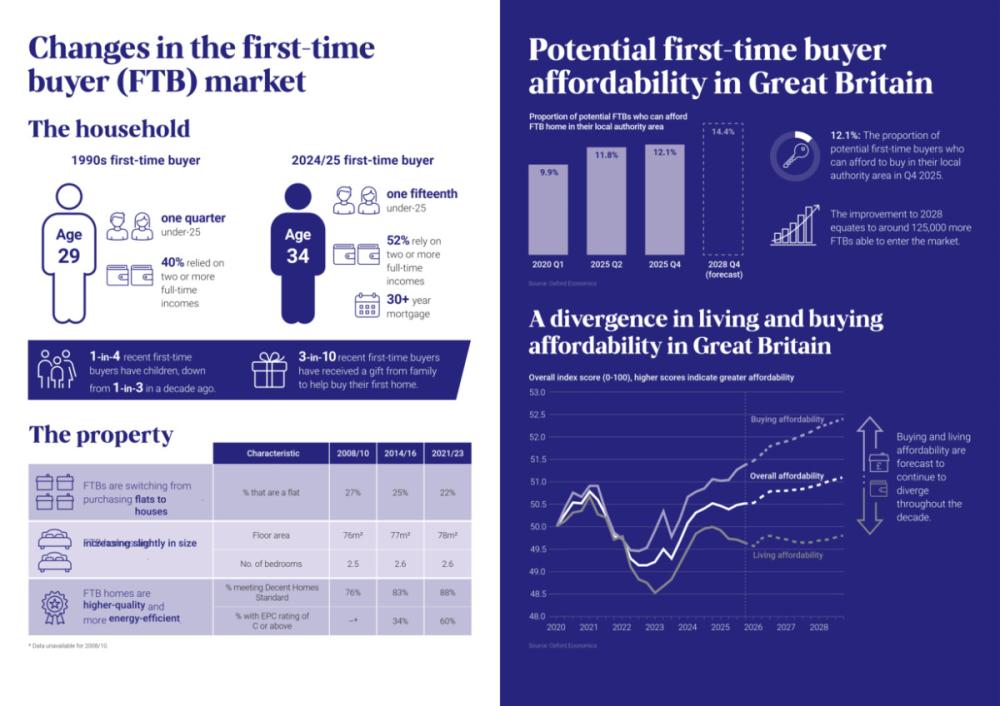
The Skipton Group Home Affordability Index, developed in partnership with Oxford Economics, highlights a significant shift in the demographic profile of new homeowners. The findings reveal that the under-25 market has effectively collapsed, falling from nearly one in four purchases in the 1990s to approximately one in 15 today.
Shifting Financial Requirements
The report underscores the increasing financial strain on those entering the property market. Key findings include:
Dual Incomes: 52% of recent first-time buyers now rely on two or more full-time salaries, up from 40% in the 1990s.
Extended Mortgages: 54% of those with mortgages are now opting for repayment terms of 30 years or more to manage costs.
Family Assistance: Around one-third of buyers now require financial help from family members to secure a deposit.
Savings Gap: The average deposit now exceeds a full year of a household's combined gross income.
Even higher earners are not immune to these barriers. The index suggests that only one in three households earning over £77,800 can afford the average first-time buyer home in their local area using their own finances.
Regional Disparities and Property Quality
While affordability remains a challenge, the research indicates that those who do successfully board the housing ladder are purchasing higher-quality assets. Nearly 90% of first homes now meet the Decent Homes Standard, and buyers are increasingly favouring houses over flats.
However, a clear divide exists between the capital and the regions. While Londoners typically purchase smaller flats with fewer bedrooms, they often occupy newer, more energy-efficient spaces compared to buyers in the North and East of England.
Outlook to 2028
There is a "glimmer of hope" in the projections, with buying affordability expected to improve from 12.1% in 2025 to 14.4% by the end of 2028. This shift could potentially enable an additional 125,000 households to enter the market.
Despite this, the report warns that geopolitical instability and rising energy prices remain significant risks that could derail these gains.

Stuart Haire, Skipton Group CEO. Credit: Skipton Group
"With fewer people buying in their twenties, there’s a growing dependence among first-time buyers on two full-time incomes or help from their parents. However, it’s encouraging to see early signs that affordability may be starting to improve, and the focus has to be on realising those gains and ensuring more people can realistically share in them."
Also by Helen Kitchen...
Northern Talent Tracker: This Week's Key AppointmentsFamily Firms Across North Hit By Tax Change AnxietyHuddersfield And Kirkham Plants Drive STADA’s €4.3bn Global GrowthManchester AI Startup Brarista Scales Internationally After £510k InvestmentUS Tariff Fears Hit North West Car And Machinery Exports