


search
date/time

Fri, 4:00AM
light rain
15.3°C
SSW 10mph
light rain
15.3°C
SSW 10mph
 | Sunrise | 6:01AM |
| Sunset | 6:03PM |  |

Liz Coggins
Features Editor
P.ublished 4th April 2026
lifestyle
Easter Treats
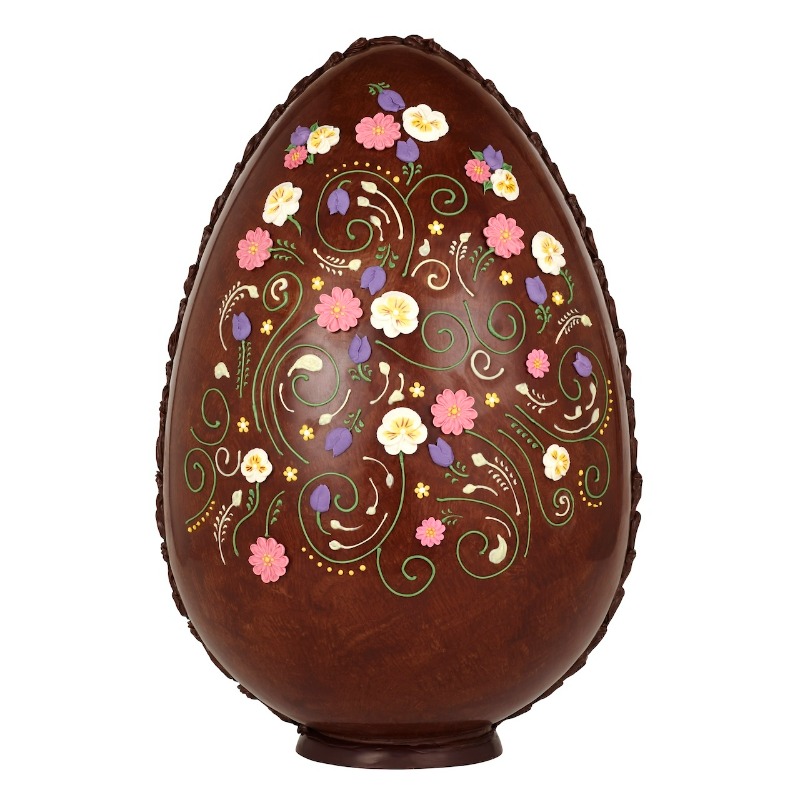
Long before Christianity was introduced, eggs were painted with bright colours to celebrate the sunlight of spring.
Decorating and colouring Easter eggs was a popular custom in the Middle Ages, and throughout Europe different cultures have evolved their own styles and colours. In Greece, crimson-coloured Easter eggs are exchanged, whereas in Eastern Europe and Russia, silver and gold decorations are common, and Austrian Easter eggs often have plant and fern designs.
Easter eggs have been coloured and decorated from earliest times. Later, craftsmen made artificial eggs of silver and gold, ivory or porcelain, often inlaid with jewels. The ultimate Easter egg-shaped gifts must have been the fabulous jewelled creations by Carl Fabergé made during the 19th century for the Russian Czar and Czarina. Today, these superb creations are precious museum pieces.
In the 18th century, people could buy pasteboard or papier-maché eggs, in which they hid small gifts. By the 19th century cardboard eggs covered with silk, lace or velvet and fastened with ribbon were fashionable.
In Europe Easter eggs are taken seriously. The old art of decorating the real egg is still very much alive. Many of them are dyed red to symbolise Christ’s blood
The chocolate Easter egg has developed from the simple type wrapped in paper to the beribboned variety wrapped in the brightest foil and packed in a box or basket.
The first chocolate Easter eggs were made in Europe in the early 19th century, with France and Germany taking the lead in this new artistic confectionery. A type of eating chocolate had been invented a few years earlier, but it could not be successfully moulded. Some early eggs were solid, while the production of the first hollow chocolate eggs must have been rather painstaking, as the moulds were lined with paste chocolate one at a time!
The modern chocolate Easter egg with its smoothness, shape and flavour owes its progression to the two greatest developments in the history of chocolate – the invention of a press for separating cocoa butter from the cocoa bean by the Dutch inventor Van Houten in 1828 and the introduction of pure cocoa by Cadbury Brothers in 1866. The Cadbury process made large quantities of cocoa butter available, and this was the secret of making moulded chocolate or, indeed, any fine eating chocolate.
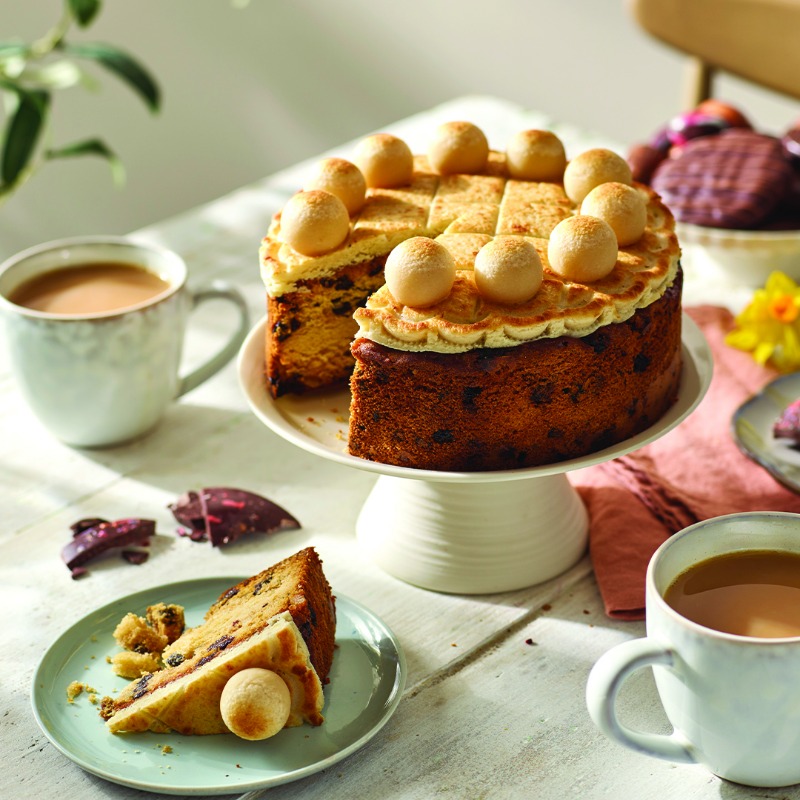
But Easter treats are not all about eggs. The Simnel cake is associated with Easter today but was originally made for Mothering Sunday, the fourth Sunday in Lent. Originally Mothering Sunday was the day when the congregations of the daughter churches of a parish went to the mother church, usually an abbey, to give their offerings.
In the 17th century, Mothering Sunday became the day when girls and boys in service were allowed a day off to go and visit their mothers. This was their one and only holiday. The girls would bake their mothers a Simnel cake as a gift.
Simnel cakes have been baked since the Middle Ages, and it is believed that the word 'Simnel' comes from the Latin 'Simila', which meant very fine flour made from wheat. Simnel cakes were difficult to make, but if made properly, they would keep for a few weeks. Thus, the baking of a Simnel cake for Mothering Sunday was not only a gift from a girl to her mother but also a test of the girl’s cooking skills. The cake would not be eaten until Easter Sunday, and the whole family would be anxious to see if the cake was still moist.
B
Whether you intend to celebrate Easter with traditional English recipes or with the relatively modern tradition of chocolate Easter eggs, Happy Easter to you!
Also by Liz Coggins...
Preston's Cotton Empire Dressed The QueenBlackpool Is All Lit UpThe Great Switch-On PartyBehind the Kitchen Door: Sonya VenugopalAyckbourne's New Play opens in the Autumn at ScarboroughThe shortened address for this article is: newspub.uk/21yvo