


search
date/time

Sat, 4:00PM
overcast clouds
17.8°C
SSW 5mph
overcast clouds
17.8°C
SSW 5mph
 | Sunrise | 4:46AM |
| Sunset | 7:31PM |  |

Andrew Palmer
Group Editor
P.ublished 25th April 2026
arts
Review
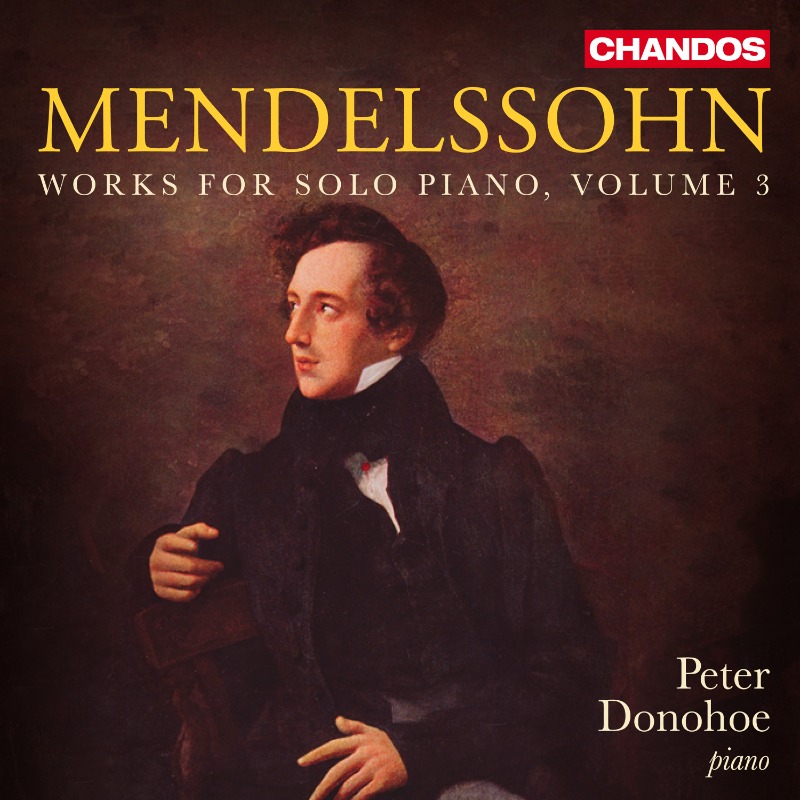
Classical Music: Mendelssohn Works For Solo Piano, Vol. 3
Virtuosity worn with an insouciant smile
Felix Mendelssohn: Scherzo à capriccio in F sharp minor, MWV U 113; Phantasie in F sharp minor, MWV U 92; Capriccio in F sharp minor, MWV U 50; Sonata in E major, MWV U 54; Sonata in B flat major, MWV U 64; Franz Liszt: Concert Paraphrase on Mendelssohn’s ‘Wedding
March’ and ‘Dance of the Elves’ from A Midsummer Night’s Dream
Peter Donohoe (piano)
Chandos CHAN 20347
Chandos.net
The Capriccio, Op. 5, is marvellously played: six articulate minutes in which Donohoe captivates through the speakers as readily as he does in the hall. This is Donohoe and Mendelssohn showcased as brilliant in their respective fields of performance and composition.
In the Fantasie in F-sharp minor, Op. 28—the so-called Sonate écossaise, dedicated to Moscheles— one hears the shadow of Beethoven at once, and Donohoe manages the delectable arpeggio opening superbly well. As for the finale, is 'presto' really the right word? It is fast and furious; one could almost be out of breath by the time the final chord arrives. Mendelssohn does slow the tempo slightly, yet even within the fastness of the music, the detail remains omnipresent under Donohoe's fingers.
The Sonata in B-flat major, Op. 106—published posthumously— is yet another superb performance, and here Beethoven's influence is unmistakable once more, particularly in the long shadow cast by the Hammerklavier. The scherzo, meanwhile, conjures the gossamer world of Mendelssohn's own Midsummer Night's Dream – ephemeral, quicksilver, everything so well judged by Donohoe.
The treat at the end is Liszt's witty and elfish concert paraphrase on themes from A Midsummer Night's Dream, which opens with the Wedding March and once again shows off Donohoe's phenomenal technique, dazzling and sparkling with palpable joy. The seamless integration of the themes, coupled with the technical wizardry of the entire charming piece, elicits a broad smile.
All the works recorded here were composed between 1825 and 1835, when Mendelssohn was aged between sixteen and twenty-six—a decade of constant travel, from Berlin to Paris via Weimar, thence to London and Scotland, and eventually to Düsseldorf and the directorship of the Gewandhaus Orchestra in Leipzig. Donohoe, born in Manchester in 1953 and trained at Chetham's, Leeds, the RNCM and in Paris with Messiaen and Loriod, is precisely the pianist to marshal all of this repertoire with such unshowy authority.
An eloquent and entertaining conclusion to volume three of this superb Chandos cycle.