


search
date/time

Tue, 12:00AM
light rain
8.9°C
SSW 16mph
light rain
8.9°C
SSW 16mph
 | Sunrise | 6:06AM |
| Sunset | 6:28PM |  |
P.ublished 17th March 2026
nature
Biodiversity Forum: “Time For Action”
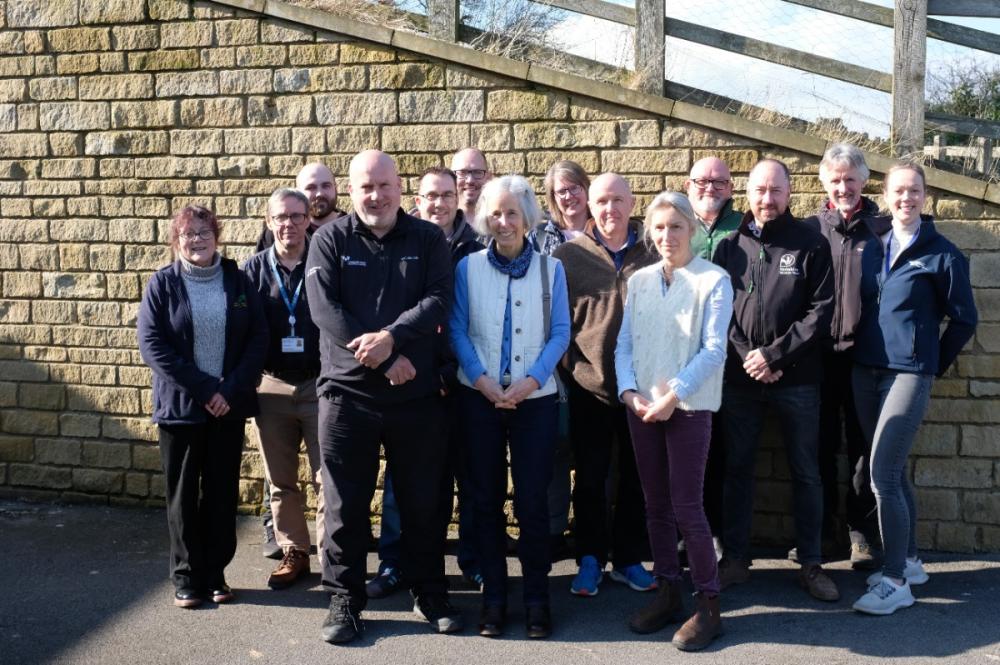
Dr Jane Smart, then from left to right: Rima Berry (Yorkshire Dales Millenium Trust), Tony Serjeant (North Yorkshire Council), Matt Beadle (YDNPA), Ian Court (YDNPA), Richard Dimon (Natural England), Graham Jackson-Pitt (Cumbria Wildlife Trust), Jane Smart (independent Chair), Fran Graham (Woodland Trust), Anthony Bradley (Farming and Land Management Forum), Helen Keep (YDNPA), Jim Smith (Forestry Commission), Jono Leadley (Yorkshire Wildlife Trust) , Ian Clement (National Trust) and Marie Taylor (Yorkshire Dales Rivers Trust).
“It’s time to turn words into action to address the biodiversity crisis,” said the new independent chair of the group, Dr Jane Smart.
Representatives of farmers, local councils, statutory agencies and wildlife charities met in Bainbridge on 5 March with officers from the Yorkshire Dales National Park Authority.
The message was clear: nature recovery plans and strategies for the National Park were in place, now was the time to speed up delivery of work to create and improve habitats for wild animals and plants.
It was stressed that much delivery would depend on a concerted effort by farmers and land managers, as well as on the government and other bodies providing the investment needed to fund initial action and long-term management.
One of the nature recovery objectives in the National Park Management Plan – “by 2030, to increase by 10,000 hectares the area of priority habitat outside of Sites of Special Scientific Interest that is in favourable management through agri-environment or similar funding schemes” – was highlighted during the meeting. No one organisation could achieve that, but organisations and farmers working in collaboration could.
Dr Jane Smart, a conservationist with international experience, said: “We’re pressing the reset button on nature recovery in the Yorkshire Dales National Park. This is about finding ways of really working together, not just being nice to each other in meetings.
“We’ve got the targets in the nature recovery plans. These plans are better than they ever have been. Now we really need to get on and deliver them.”
The main achievement of the last Yorkshire Dales Biodiversity Forum was the preparation and publication in September 2023 of the Nature Recovery Plan for the Yorkshire Dales National Park. This was used by North Yorkshire Council and Westmorland and Furness Council as part of their work to draw up county-wide Local Nature Recovery Strategies, which were published this year.
The reconstituted Biodiversity Forum will report annually to the Yorkshire Dales National Park Partnership. The “Delivery Group” will meet twice annually, with a sub group meeting more regularly to push projects forward.
Dr Jane Smart, who is from Malham, said her motivation for being involved was to inspire people to work together in a meaningful way that would bring about results on the ground.
Asked what Yorkshire Dales habitat she loved to spend time in, she said: “I’ll go for limestone pavement. There’s nothing better on a sunny morning than to hear the call of the curlew and spot a bird’s eye primrose.”